Building the Baldwin-Motion SuperSpeedster


Phil Somers and Joel Rosen
adjust valves at the Dyno facility.


PHIL SOMERS AND HIS TEAM
AT AMERICAN SUPER CAR
CREATE THE MOST EXTREME
1969 CAMARO EVER!

How did Motion top
their mind blowing SuperCoupe?
How about with a radical
700-horsepower SuperSpeedster?

Text by Paul Zazarine

Photography by
Phil Somers, Marty Schorr
and Paul Zazarine


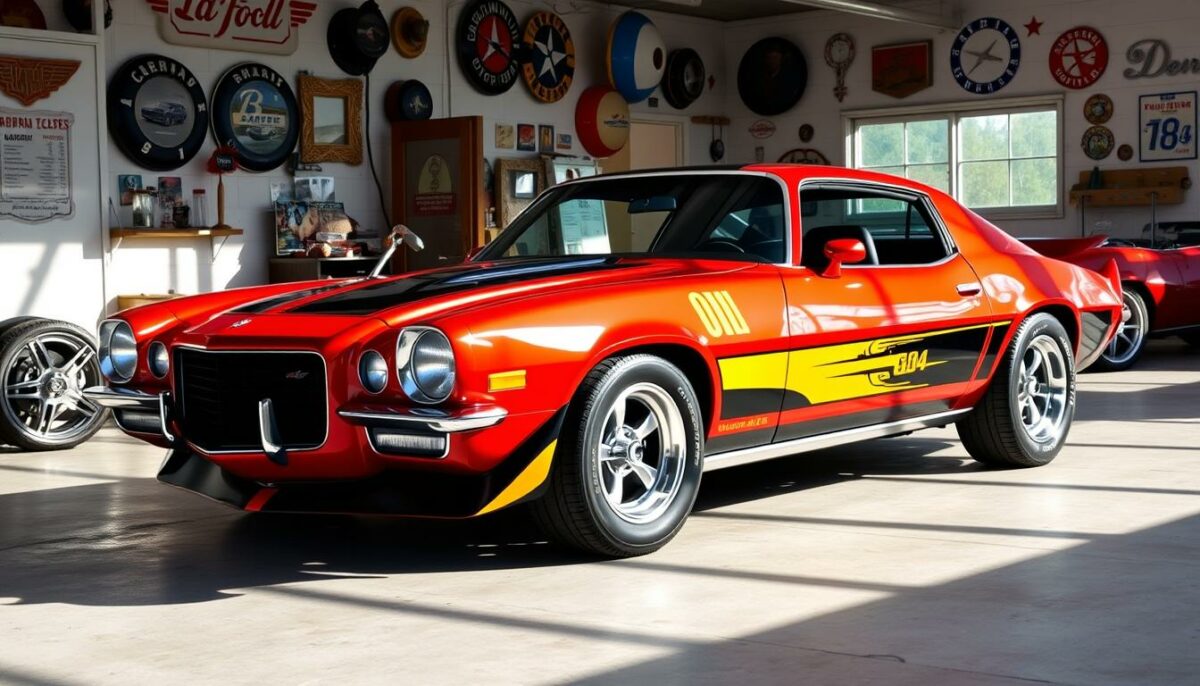
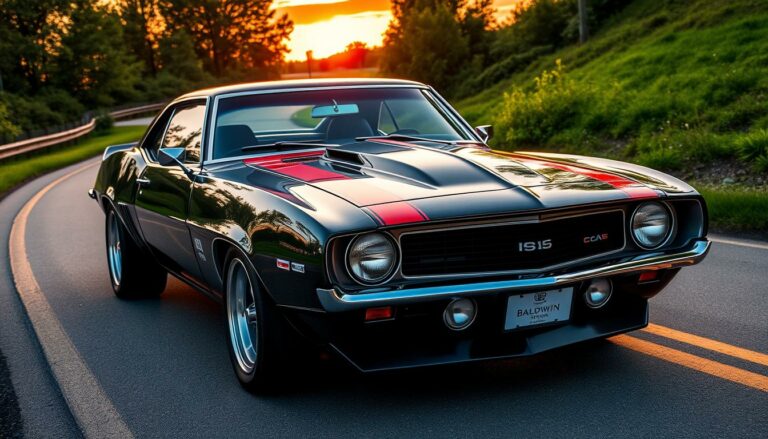
This is no ragtop. It's not what you'd call a Pro Street Camaro. It's a Motion SuperSpeedster, and it's unlike any Camaro ever built.


The Motion SuperSpeedster is beginning to take on its final form.
The Be-Cool aluminum radiator is fitted in the core support
and the front end has been installed.
The engine compartment is super sanitary.


By now, most Chevy fans are aware of Motion's incredible SuperCoupe that debuted at the 2005 Specialty Equipment Market Association (SEMA) convention in Las Vegas. Long, wide and mean, the SuperCoupe was designed by Kris Horton and hand crafted by Phil Somers and literally stole the show. In recognition of its superb design and engineering, the SuperCoupe won the prestigious third annual ì2005 Best GM Design Awardî presented by General Motors' Kip Wasenko, who is Director Of Design for Special Vehicles.

For the 2006 SEMA convention, Motion chose to return with another Horton design. This time they chose a radial speedster that was based on the SuperCoupe. But, as Motion's CEO Larry Jaworske observed, ìthe SuperSpeedster is a step up from the SuperCoupe in design, engineering and execution.î

The concept of a speedster instead of a standard convertible is just the kind of Camaro Motion likes to build. While their Phase III Motion Camaros are available in either coupe or standard convertible configurations, the Super Series are wild custom interpretations of the classic 1969 Camaro. To give you an idea of how wild the Super Series Motion cars are, consider this: The SuperCoupe went to the Barrett-Jackson auction last January and sold for $450,000. The SuperSpeedster was sold before it was built to Steve White of Sarasota, Florida. Steve will take delivery after the SEMA convention.


The SuperSpeedster unique shape is emerging.
The tubs are in place, the fenders and quarters are flared
and the front end fitted. Even at this point, Phil was still in the process of changing the SuperSpeedster's rear deck design.
   

The SuperSpeedster exceeds the parameters of most custom cars built today, but in many ways it is a throwback to the kind of coachwork done by the masters like George Barris and Gene Winfield. Phil Somers is a student of these early craftsmen, and as he admits, “I'm old school.” He sees a custom as a rolling work of automotive art, and his interpretation of Horton's design is like nothing you'll see anywhere else.

The SuperSpeedster begins as a genuine 1969 Camaro and is totally re-engineered. The front sub frame is pitched and the unit body is stripped of floors, quarters and trunk. A specially designed 2” x 3” square tube steel chassis is constructed with a spine/backbone that runs the length of the center console and ties the body to the frame. This platform is so rigid that if you were to jack up one corner of the car, the entire side would raise up. The engine is setback 13 inches from stock. Since the SuperSpeedster is a two-seater, the engine placement allowed Phil to move the instrument panel rearward.

The front and rear suspensions are independent, with heavy duty cast aluminum short upper and long lower control arms, Penske racing coilover shocks and massive stabilizer bars. The steering is updated to power assisted rack and pinion with variable ratio. The rear is narrowed eight inches and boasts a Dana 44-4 Hydra-Lok speed sensing limited-slip differential.

The brakes are Baer Extreme -Plus two-piece, 14-inch cross-drilled and slotted rotors with six-piston sport calipers at all four corners. Both the front and rear brakes are ducted for additional cooling. Motion chose Bonspeed Huntington wheels with 18 x 10” up front on 285/30ZR18 Michelin Pilot Sports tires. At the rear, the Bonspeeds measure a steam roller-size 19 x 12” on 345/30ZR19 Michelin meats.

The SuperSpeedster body may look similar to the SuperCoupe, but the differences are significant. As Phil noted, “there isn't a single body panel on this car that wasn't altered.” Up front, the fenders were cut, stretched and widened four inches on each side and bulge out over the wide wheels for a muscular look. This wasn't done on the SuperCoupe. By widening the front fenders, it provides a balance with the quarters, which received a five-inch widening job on each side. The Camaro's side wind split that begins at the front wheel opening and whips rearward to mid door was raised ½” and gives the SuperSpeedster an appearance lower than it really is. The tail lamp panel looks recessed, but it really isn't. Instead, the rear of the quarter panels and the trailing edge of the deck were extended two additional inches past the tail lamp panel's stock location.


The SuperSpeedster is tailored not only to the customer's list of options and accessories; it's also ergonomically crafted to his physical specifications. Motion President Joel Ehrenpreis and Phil worked with Steve White, who purchased the SuperSpeedster to determine where Steve wanted the shifter, steering wheel placement and pedal locations. These measurements will be factored into the SuperSpeedster's final interior dimensions.


The paint is a retina-burning Motion Yellow with the traditional Motion wide center stripe, this time done in Charcoal. The base coat/clear coat has four extra coats of clear, each coat hand rubbed for a deep luster. The center stripe runs the length of the car, including through the interior and instrument panel.

Inside, Phil designed an interior themed after the classic 1963 Corvette cockpit. The gauge cluster panel is constructed of one-piece billet aluminum. It's been machine swirl polished and custom fitted with Auto Meter gauges. The charcoal interior boasts leather seats and leather dash pads. The console top matches the machine turned gauge cluster panel.

A true speedster doesn't have a top. What the Motion SuperSpeedster does have is a custom fitted tonneau cover designed by Phil. He also engineered the power operating system that raises and lowers the tonneau cover. In the center of the seats is a large round hole that is part of the woofer system utilizing a tube through the console connected to a sealed box in the trunk, which contains a pair of 10” woofers. “The sound channels through the tube and,” Phil said. “It will fill the interior with more bass boom than the most radical hip hop tuner car. It will make your inners vibrate!”

Everywhere you look in, under and on the SuperSpeedster, you'll find an extensive use of custom aluminum billet, much of it cut by Phil. That's true except for under the Stinger hood. There you'll find a 540 cubic inch Brodix/Motion engine that produces in excess of 700 at the flywheel. While Motion engines are available with carburetion, supercharging or fuel injection, the SuperSpeedster's engine is fitted with a Kinsler Cross Ram fuel injection arrangement that looks spectacular and delivers incredible amounts of power across the rpm range. Hooked to the engine is a Tremec five-speed manual gearbox.

The sum of these parts produces one hell of a wild ride. With powerful styling and Saturn rocket-like power, the SuperSpeedster is in a class all its own. Next month we'll show you Motion's SuperSpeedster in completed form and you'll agree it's like no Camaro you've ever seen.

"BUILD" - page 1 | page 2 | page 3

SEMA 2006 PHOTOS | SUPERSPEEDSTER SPECIFICATIONS


PRODUCT LINKS HOME CONTACT STORE PRESS HISTORY